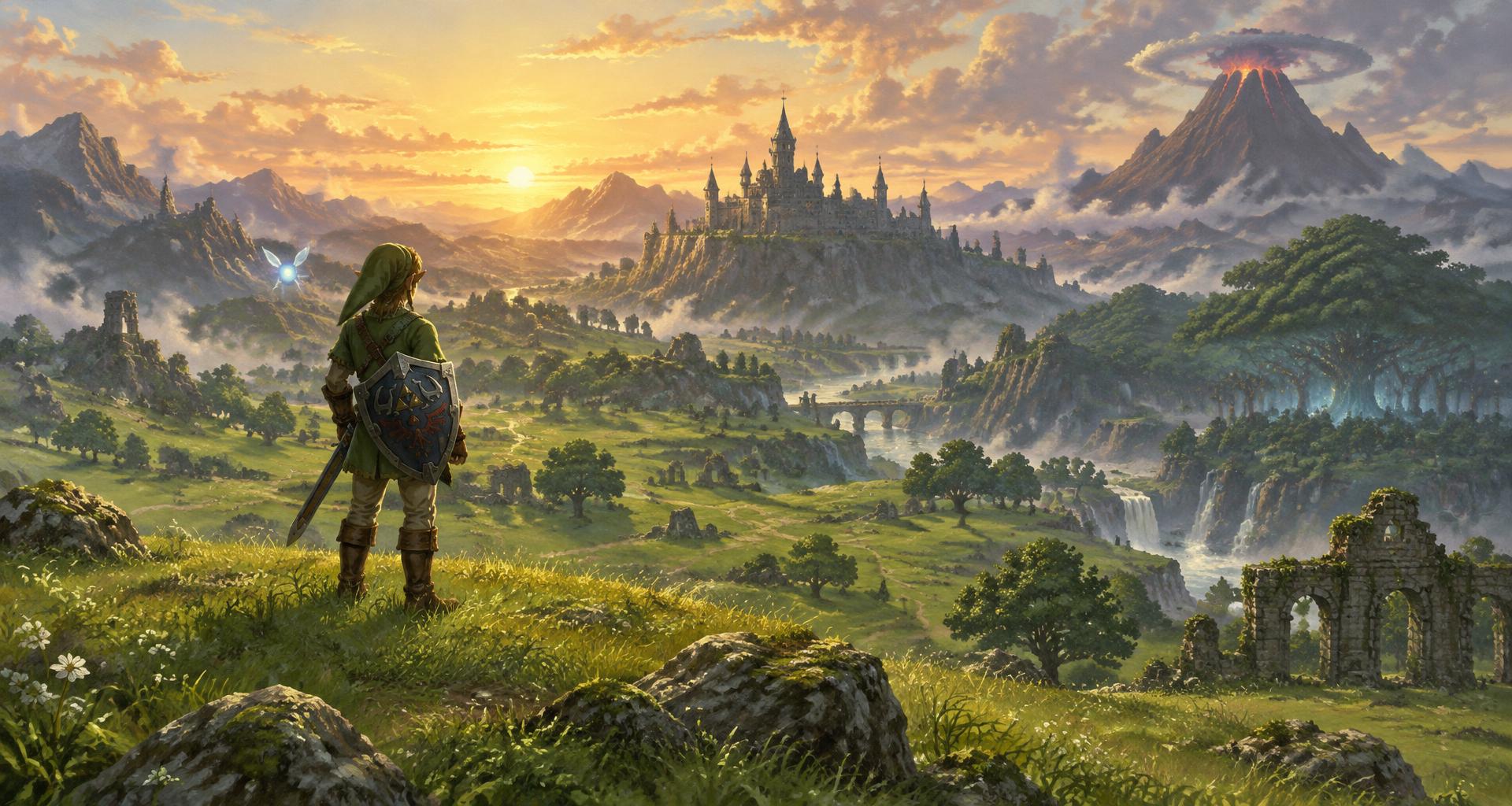
There are games one remembers, and there are games one remembers through. For many who were children in 1998, The Legend of Zelda: Ocarina of Time on the Nintendo 64 belongs to the second category: a lens through which the very idea of a virtual world came into focus. Now, after years of rumour, Nintendo has released a full remake — and with it, an old and unavoidable question about whether a masterpiece can be rebuilt without being diminished.
The stakes are unusually high. When it launched, IGN called the original “the biggest game of the decade.” Nearly three decades later it remains the highest-rated game in history on the review aggregator Metacritic. Its influence is so thoroughly absorbed into the grammar of modern play — riding a horse across an open field, fighting with sword and shield, locking on to an enemy with a single press of a button — that we rarely remember someone had to invent, or at least perfect, these things. Ocarina did.
So how does one remake a cathedral? Nintendo’s answer, it turns out, is to restore rather than redesign.
A familiar road, newly paved
Anyone who grew up with the original will feel at home within minutes. Rather than reinvent the wheel, Nintendo has produced something that plays strikingly close to the N64 classic: the same rhythms, the same routes, the same quiet sense that the next ridge might hold something wonderful. Reporting by the BBC’s technology desk found the remake faithful almost to the point of muscle memory.
What has changed, dramatically, is the image. Castle Town’s cobbles now have texture; crowds gather around a fountain beneath buildings rendered in fine detail. Characters such as Saria are vividly expressive, and Link’s fingers now move over the holes of the ocarina as he plays — a tiny gesture that tells you precisely how much care has gone into the work.
Nintendo producer Hidemaro Fujibayashi frames the shift as a change in what audiences expect. In the past, he told the BBC, games often required players to use their imagination “to fill the blanks or the gaps”; today those gaps “are now clearly expressed through the graphics that they see on the screen.”
“The norms of what people expect from a game have evolved naturally.”
— Hidemaro Fujibayashi, Nintendo producer
That is a generous, accurate observation — and also the heart of the dilemma. Much of Ocarina’s power lived in its gaps. Blocky polygons and fog were not merely limitations; they were invitations. A child’s mind supplied menace to the shadows and grandeur to the horizon. Clarity is a gift, but it is also a kind of answer, and answers can close doors that ambiguity left ajar.
When beauty makes things scarier
The new art direction leans away from realism toward something softer and more stylised, which some long-time fans may regret. The original had genuinely unsettling corners — none more so than the Skulltula House, where people had been transformed into grotesque human–spider hybrids.
Series producer Eiji Aonuma, who worked on the 1998 game, explained that the original team “strove to add a touch of the comical” even to its scary elements, partly because their means of expression were limited. Paradoxically, modern lighting and graphics amplified those moments. During test play, he said, testers complained: “Oh, this is too scary.” The final version was adjusted to restore the balance the original had struck.
It is a fascinating admission. Fidelity, it seems, is not a matter of copying pixels but of preserving feeling — and preserving feeling sometimes means changing the thing itself.
“Serious thought has gone into every decision”
Early responses from prominent video creators have been overwhelmingly warm. Mike Channell, co-editor of the YouTube channel Outside Xbox, described the remake as made “very meticulously,” adding that he was not convinced it had taken “any less time and effort than an all-new Zelda game.” The world, he said, is “fleshed out,” “sumptuously detailed,” and the controls “match 21st-Century expectations.”
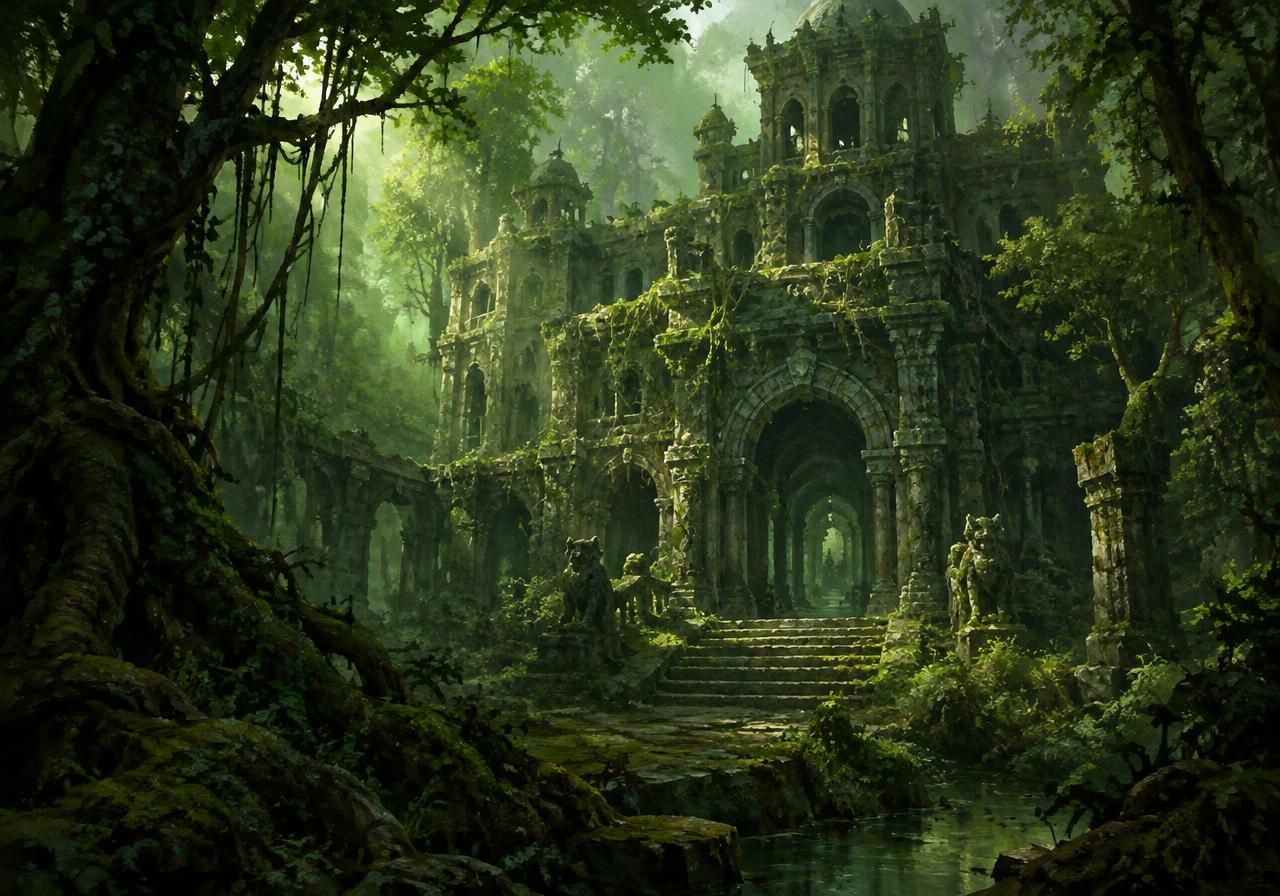
Ed King, known as Zeltik to his roughly 893,000 YouTube followers, singled out the Forest Temple — long his favourite dungeon, “a mysterious, haunted mansion in the deep woods” — and praised how the remake “really leans into the surreal, uncanny nature of the original.” Fellow creator StrawHatMidas called it a “love letter to the classic Zelda formula.”
“I loved the original as much as the next person, but I don’t think I’ll be going back to it.”
— Mike Channell, Outside Xbox
Has Nintendo played it too safe?
The changes that do exist are pointed and sensible. The infamous Water Temple — roughly two-thirds of the way through the adventure, and notorious for being “very, very difficult” — was the thing Aonuma personally most wanted to fix. Players can now switch the essential heavy boots with ease and freely orient the camera, a dual-stick convention the N64’s single joystick could not offer. Few will mourn the old frustrations.
Yet the BBC’s reviewer noted something more complicated: the trip down memory lane is at times captivating, but familiarity can also flatten discovery. Puzzles fall too quickly when your hands remember the solutions before your mind does. There are surprises, he wrote, but one wishes there had been more.
Here lies the paradox of the faithful remake. Film and television remakes are usually judged by how boldly they reinterpret; game remakes are judged by how well they protect. Fans clamour for modern technology while dreading modern meddling. Nintendo has chosen protection — and Fujibayashi insists the essence remains: “Even if the game may look different, we’ve maintained the essence that the original developers wanted to.”
Perhaps that is enough. The original’s magic was never in its polygons; it was in the sensation of stepping into an unknown world for the first time. No remake can give veterans that first step back. What it can do is offer it, intact and gleaming, to a generation who never had it — and that may be the truest measure of success.
With the franchise’s first live-action film arriving next year, there is clearly more Zelda on the horizon. Asked whether, after another thirty years of technological progress, Nintendo might remake the game yet again, Aonuma simply laughed. “I will be long retired,” he said.
■ Reporting draws on interviews published by BBC News technology reporter Tom Gerken. Quotations are attributed to their original speakers.